
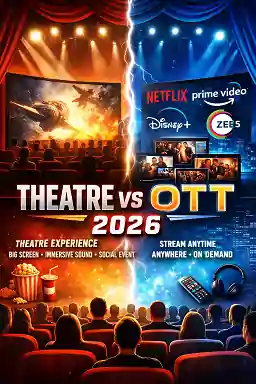
Theatre vs OTT in 2026: An Evolution of Entertainment
In 2026, the entertainment industry has undergone significant changes, with theatres and Over-the-Top (OTT) streaming services like Netflix, Amazon Prime Video, Disney+, and Zee5 at the forefront of this transformation. With the ever-evolving landscape, both mediums have made their mark on how we consume content, and the rivalry between theatres and OTT platforms has become more pronounced than ever. As we look at the present and the future of both, it’s clear that this battle will continue to shape the way we experience entertainment.
The Rise of OTT Platforms: A Game Changer in Entertainment
The OTT Revolution
The OTT revolution started decades ago with services like Netflix, but by 2026, it has completely reshaped the entertainment ecosystem. These platforms have made it easier for consumers to access a wide variety of content, from blockbuster movies to niche indie films, documentaries, and TV shows, all on-demand. The streaming model has not only disrupted traditional television but also altered the way we watch movies.
Platforms like Netflix, Amazon Prime Video, Disney+, Hulu, and Zee5 dominate the OTT market today. Each of these services has carved a niche for itself, producing original content and offering an unparalleled array of viewing options. Whether it’s Amazon Prime Video’s exclusive rights to major sports events or Netflix’s multi-genre original programming, OTT services have become the go-to choice for entertainment.
OTT Convenience and Accessibility
The convenience that OTT platforms offer is unrivaled. No longer do viewers have to worry about rigid schedules or being at a particular place to watch a show or movie. OTT allows for viewing anytime, anywhere, as long as there’s an internet connection. Whether on a smartphone, tablet, smart TV, or laptop, viewers can access a library of movies, TV shows, documentaries, and more from the comfort of their homes.
The freedom to binge-watch entire seasons of TV shows without waiting for weekly episodes has also contributed to the massive appeal of platforms like Netflix and Amazon Prime. The availability of content across multiple languages, genres, and formats ensures that there is something for every viewer, regardless of age or preference.
OTT Content: Diverse and Global
In terms of content, OTT platforms have the edge. While theatres are limited to a set number of releases per year, OTT platforms offer an endless library. For example, Netflix and Amazon Prime Video have invested heavily in original productions and have an extensive collection of both international and regional content, catering to diverse audiences across the globe. As a result, viewers from India, South Korea, Europe, and the U.S. can all enjoy content in their native languages, without having to leave their homes.
Local platforms such as Zee5 have also captured regional markets by focusing on content tailored to specific cultures and languages, such as Bollywood films, South Indian cinema, and regional series. This tailored approach has contributed to the success of Zee5 and other local OTT platforms in regions like India.
The ability to stream exclusive content is another key factor in the dominance of OTT services. For instance, Disney+ is the exclusive home for all things Marvel, Star Wars, and Pixar. Similarly, Amazon Prime Video continues to invest in high-profile series such as The Boys and Lord of the Rings: The Rings of Power, while Netflix churns out hit after hit with shows like Stranger Things, Money Heist, and Bridgerton.
Affordability of OTT Services
Compared to the cost of cinema tickets, OTT subscriptions offer a more affordable way to watch content. While a single movie ticket might cost anywhere between $10 to $20, depending on the location and cinema chain, a monthly subscription to Netflix, Amazon Prime, or Disney+ costs significantly less and provides unlimited access to a wide range of content.
This affordability, combined with the ease of access and flexibility of viewing, has played a key role in the rising popularity of OTT platforms. For a family or an individual, the cost-effectiveness of an OTT subscription is far more appealing than paying for each movie at the theatre.
The Theatre Experience: Why it Still Holds Value in 2026
While OTT platforms have rapidly taken over as the preferred mode of entertainment, the theatre experience remains an essential part of cinema culture. Cinemas provide an immersive and communal environment that streaming services can’t replicate, making them a vital part of the entertainment landscape.
Immersive Cinematic Experience
One of the key reasons people continue to flock to the theatres is the immersive experience they provide. With huge screens, surround sound, and cutting-edge technologies such as IMAX and Dolby Atmos, theatres offer a viewing experience that OTT platforms simply cannot match. This is especially true for action-packed blockbusters, superhero movies, and visually stunning films.
For example, films like Marvel’s Avengers series, Star Wars, and Avatar are crafted with the theatre experience in mind, offering jaw-dropping visuals, deep sound effects, and a grand scale that is difficult to replicate on home screens, even with the best home theater setups. The sheer size of the screen, the high-quality sound systems, and the 3D experiences available in select theatres make it the perfect setting for blockbuster films.
The Social and Communal Experience
Another element that sets theatres apart is the communal experience. Going to the movies is a shared experience where the audience reacts together—whether it’s laughing, gasping, or crying during key moments in a film. There’s something special about being surrounded by people who share the same passion for a film, as you all experience the story in real-time.
Unlike the solitary nature of watching content on OTT, theatres allow for a sense of community. Moviegoers engage in conversations before and after the film, discussing the plot, characters, and various other elements of the film. The atmosphere, the sound of people laughing or gasping in unison, creates an energy that is unmatched by the solitary nature of home viewing.
Exclusive Releases and Premieres
While OTT platforms have become home to exclusive shows and movies, theatres still have the advantage when it comes to exclusive releases. Major studios continue to release their high-budget blockbusters in cinemas first, sometimes with a delay for OTT releases. Movies like Avatar 2, The Batman, and Jurassic World often receive a theatrical release before they are made available on streaming platforms.
The idea of attending a movie premiere, getting first access to the latest films, and watching them in a grand setting continues to be appealing for many. The exclusive, “event” feel of watching a movie on opening night with other fans adds a level of excitement and anticipation that you can’t find on OTT platforms.
Cinemas as Cultural Institutions
Cinemas hold a special place in cultural history. For decades, they have been venues for showcasing classic films, art-house cinema, and important cultural moments. While OTT platforms focus primarily on mainstream content, cinemas continue to be the home for indie films, documentaries, foreign-language films, and niche content that doesn’t always get the same amount of attention online. Film festivals like Cannes, Venice, and Toronto remain integral to cinema culture, showcasing films that are often later distributed to theatres rather than streaming platforms.
The Big-Screen Magic for Blockbusters
Despite the rise of OTT, theatres remain the best option for watching the biggest blockbusters. The stunning visual effects and soundscapes in movies like Top Gun: Maverick and Dune were designed to be experienced on a large screen with powerful sound systems. The level of detail and the grandiose atmosphere can only be fully appreciated in a cinema. OTT may offer convenience, but it can’t quite recreate the magic of sitting in a darkened room and watching a film unfold before your eyes on a massive screen.
The OTT vs. Theatre Debate: What Does the Future Hold?
As we look to the future of entertainment in 2026 and beyond, it seems that the theatre vs OTT debate is far from over. Both mediums have their unique advantages, and the future will likely see them coexist in a symbiotic relationship rather than a winner-takes-all scenario.
Hybrid Viewing Experiences
In the near future, we could see more hybrid experiences where the lines between OTT and cinema continue to blur. For example, OTT platforms are increasingly experimenting with simultaneous releases, where films are made available both in theatres and on streaming platforms on the same day. Disney has already begun to experiment with this with films like Mulan and Black Widow, and it could become more common as we move into 2026.
Theatrical Releases for Event Films, Streaming for Everything Else
We may see theatres becoming more focused on event films, with OTT platforms continuing to serve the general market. OTT will continue to dominate for everyday content, providing convenience, cost-efficiency, and a wide variety of options. Theatres, on the other hand, may cater specifically to audiences who want to experience the magic of cinema with the big screen, sound, and special effects.
Innovation in Theatres
In an attempt to compete with OTT, theatres may continue to innovate with new technologies and business models. 4D cinema and other immersive experiences could become more common, offering dynamic seating, environmental effects like wind or scents, and interactive elements that make watching a movie a full-body experience. Cinemas might also explore subscription-based models or tiered pricing based on seat selection and viewing experience.
Conclusion: The Best of Both Worlds
By 2026, the OTT vs theatre debate has evolved into one of coexistence. While OTT platforms provide unmatched convenience, accessibility, and a vast content library, theatres continue to offer a unique, immersive, and social experience that OTT can’t match. Both mediums will continue to play an integral role in shaping the future of entertainment, with OTT offering on-demand content and theatres focusing on blockbuster experiences and special events.
The future of entertainment is likely to see OTT and theatre complementing each other, catering to different consumer needs. While the OTT platforms will dominate the casual viewing experience, cinemas will continue to be the venue for experiencing the magic of film on a grand scale. Thus, in 2026 and beyond, we can look forward to an entertainment ecosystem that offers the best of both worlds.
Advertisement – Accounting Partner –Accutech , Publicity Partner- BDRINGESTA , Branding Partner – Ayuvista,Best Acting Classes Near me- MS Asian Film Academy , Supported by Nav Times News , Powered by MSasian Entertainment , Hospitality Partner – Health Mark Food