Portfolio & Audition Training: The Complete Guide for Aspiring Actors in India
Portfolio & Audition Training– The entertainment industry in India has changed dramatically over the last few years. Earlier, actors mainly depended on film studios, television auditions, or personal references to enter the industry. Today, with the rise of OTT platforms, web series, music videos, digital advertisements, YouTube productions, Punjabi cinema, Bollywood projects, and independent films, opportunities for aspiring actors have increased tremendously. However, competition has also become stronger than ever.
In this highly competitive industry, talent alone is not enough. Every aspiring actor must understand two extremely important aspects of the acting world — professional portfolio creation and audition training. These are the two pillars that help actors present themselves professionally and confidently in front of casting directors, filmmakers, production houses, and talent agencies.
A great actor with poor audition skills may lose opportunities, while a confident performer with proper training and presentation often gets selected faster. Similarly, a strong acting portfolio creates the first impression before an actor even enters the audition room.
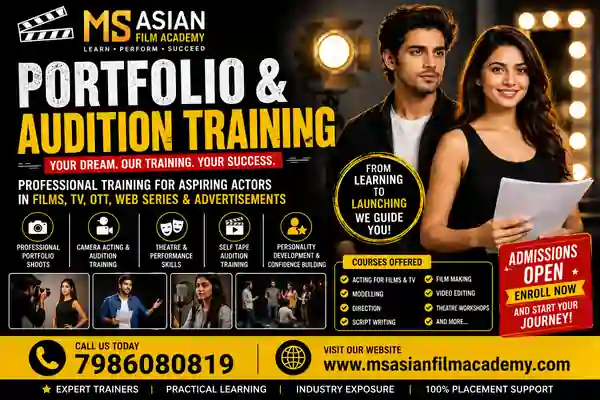
This is why professional acting institutes like MS Asian Film Academy focus heavily on practical portfolio and audition training for aspiring actors. The academy provides industry-oriented acting education, camera training, personality development, and professional guidance for students who wish to build careers in films, television, OTT platforms, modelling, and digital entertainment.
You can learn more about the academy at MS Asian Film Academy Official Website.
What Is an Acting Portfolio?
An acting portfolio is a professional presentation of an actor’s personality, appearance, expressions, and versatility. It works like a visual resume that casting directors use to judge whether an actor may fit a particular role.
Before inviting actors for auditions, many casting teams first review their portfolios. A professionally created portfolio increases the chances of being shortlisted for auditions, projects, advertisements, web series, and films.
An acting portfolio usually includes:
- Professional photographs
- Close-up shots
- Mid shots
- Full-length photographs
- Character looks
- Expression photographs
- Introduction videos
- Monologues
- Profile details
- Height, weight, language skills, and experience
The main purpose of a portfolio is to showcase the actor’s personality naturally without excessive editing or artificial styling.
Why Portfolio Training Is Important
Many beginners believe that simply clicking photographs is enough to become an actor. In reality, professional portfolio creation is a skill that requires guidance, understanding of camera angles, body language, expressions, styling, and confidence.
Professional portfolio training helps students understand:
- How to face the camera naturally
- Which expressions look authentic
- How to maintain posture
- How to present different emotions
- How to create versatile looks
- How to appear confident on camera
- How to avoid overacting in photographs
At MS Asian Film Academy, students are guided through professional camera-facing sessions and personality development exercises that help improve their overall presentation skills. The academy focuses on practical exposure and performance development for aspiring actors.
Types of Portfolio Shoots for Actors
1. Basic Portfolio Shoot
This is generally the first professional shoot for beginners. It includes:
- Natural photographs
- Basic expressions
- Simple styling
- Front and side profiles
- Casual and formal looks
The purpose is to create a clean and realistic presentation for auditions.
2. Character-Based Portfolio
This type of portfolio is designed for actors who want to show versatility. Different costumes, expressions, and looks are used to portray multiple characters such as:
- Corporate professional
- Romantic character
- Villain
- Emotional role
- Traditional look
- Action look
- Rural character
- Urban youth
This helps casting directors understand the actor’s range.
3. Modelling Portfolio
Actors interested in advertisements, fashion shoots, or modelling assignments often require specialised portfolios with:
- Fashion poses
- Brand-oriented looks
- Stylish styling
- Editorial photographs
- Commercial expressions
4. Child Actor Portfolio
Children entering acting require portfolios that look natural, innocent, expressive, and energetic. Child portfolios focus on:
- Smile expressions
- Fun activities
- Emotional reactions
- Natural candid shots
Many acting institutes now provide specialised training for child artists as well.
Common Portfolio Mistakes Beginners Make
Many aspiring actors make mistakes that reduce their chances of getting selected. Some common mistakes include:
Overedited Photographs
Heavy filters and editing hide the actor’s real appearance. Casting directors prefer natural looks.
Too Much Makeup
Natural presentation is always more effective for auditions and casting calls.
Unrealistic Poses
Overdramatic modelling poses may not work for acting auditions.
Poor Styling
Wearing unsuitable clothes can make photographs look unprofessional.
Lack of Expressions
Actors must showcase emotional range in their portfolio.
No Professional Guidance
Without proper guidance, many beginners create portfolios that fail to match industry standards.
This is why training under professional mentors becomes extremely important.
What Is Audition Training?
Audition training prepares actors to perform confidently during casting calls. It teaches actors how to handle pressure, understand scenes, perform naturally, and impress casting directors.
An audition is not just about delivering dialogues. It tests:
- Confidence
- Camera awareness
- Voice clarity
- Emotional control
- Timing
- Expressions
- Improvisation
- Character understanding
Even talented actors can struggle during auditions if they lack professional preparation.
Why Audition Training Is Necessary
The entertainment industry receives thousands of audition applications daily. Casting directors usually spend only a few minutes evaluating each candidate.
Proper audition training helps actors:
- Deliver dialogues naturally
- Avoid nervousness
- Understand camera framing
- Perform under pressure
- Improve voice modulation
- Build confidence
- Understand emotional scenes
- Improve body language
- Handle rejection positively
Professional audition practice increases the chances of selection significantly.
According to various academy descriptions and training highlights, MS Asian Film Academy provides camera exposure, acting practice, workshops, personality development, and audition guidance to aspiring actors.
Important Skills Taught in Audition Training
1. Camera Facing
Many beginners become uncomfortable in front of cameras. Training helps students maintain eye contact, facial control, and confidence.
2. Dialogue Delivery
Actors learn:
- Pronunciation
- Clarity
- Emotional tone
- Timing
- Rhythm
Good dialogue delivery makes performances more impactful.
3. Voice Modulation
Voice plays a huge role in acting. Actors must know how to:
- Change pitch
- Control volume
- Express emotions
- Speak clearly
4. Body Language
Every movement communicates emotion. Audition training helps actors improve:
- Posture
- Hand movements
- Walking style
- Facial expressions
- Character behaviour
5. Improvisation
Casting directors often test spontaneity. Improvisation exercises improve creativity and natural performance.
6. Emotional Performance
Actors learn how to portray emotions like:
- Anger
- Happiness
- Sadness
- Fear
- Excitement
- Romance
- Suspense
Authentic emotions create memorable auditions.
Self-Tape Auditions: The New Industry Standard
Today, many casting directors request self-tape auditions instead of physical auditions. Actors record scenes themselves and send them digitally.
Self-tape training includes:
- Mobile camera setup
- Lighting basics
- Audio clarity
- Framing
- Background selection
- Performance delivery
- File submission techniques
Actors who understand self-taping have a major advantage in today’s OTT and digital entertainment industry.
Importance of Personality Development for Actors
Acting is not only about performing scenes. Personality also matters greatly in the entertainment industry.
Professional acting institutes often focus on:
- Communication skills
- Confidence building
- Grooming
- Public speaking
- Stage presence
- Social interaction
These qualities help actors during auditions, interviews, networking events, and professional meetings.
How Professional Institutes Help Aspiring Actors
Learning through YouTube videos or social media tips may provide basic knowledge, but structured acting education gives professional guidance and practical experience.
Professional acting academies provide:
- Industry exposure
- Camera practice
- Theatre activities
- Audition simulations
- Monologue training
- Group performances
- Script reading
- Expert mentorship
- Networking opportunities
According to publicly available information, MS Asian Film Academy offers acting, filmmaking, modelling, script writing, editing, and direction courses with practical learning methods and workshops for aspiring artists.
The academy is also recognised for providing practical training and camera exposure for beginners and advanced learners.
Career Opportunities After Audition Training
Professional portfolio and audition training can open doors to multiple career opportunities including:
- Films
- Television serials
- OTT platforms
- Punjabi cinema
- Music videos
- Web series
- Advertisements
- Modelling assignments
- Theatre productions
- Social media content creation
- Anchoring
- Influencer collaborations
The entertainment industry now offers opportunities across multiple platforms, not just traditional cinema.
How to Prepare for Your First Audition
Read the Script Properly
Understand the character and emotions before performing.
Practice Repeatedly
Confidence comes from preparation.
Dress According to the Role
Simple and appropriate clothing works best.
Stay Natural
Casting directors prefer authenticity over overacting.
Maintain Positive Energy
Confidence and positivity create a strong impression.
Accept Rejections Gracefully
Rejections are part of every actor’s journey.
The Role of Theatre in Audition Training
Theatre remains one of the strongest foundations for acting. It improves:
- Stage confidence
- Emotional control
- Voice projection
- Character understanding
- Improvisation skills
Many acting schools combine theatre exercises with camera acting to create balanced performers.
Why Chandigarh Is Becoming a Popular Acting Hub
Cities like Chandigarh, Mohali, Panchkula, and Zirakpur are emerging as strong centres for acting and filmmaking education. Students no longer need to shift immediately to Mumbai to begin learning acting professionally.
The region now offers:
- Acting schools
- Theatre groups
- Music video opportunities
- Punjabi film projects
- Digital content creation
- Professional workshops
This has encouraged many aspiring actors from North India to begin their journey locally before entering larger film industries.
How MS Asian Film Academy Supports Aspiring Actors
MS Asian Film Academy is among the recognised acting and filmmaking institutes in Chandigarh offering professional acting education and practical training. Established in 2018, the academy provides courses in acting, filmmaking, modelling, script writing, editing, and direction.
The academy focuses on:
- Practical acting training
- Camera performance
- Audition preparation
- Portfolio guidance
- Personality development
- Workshops
- Theatre exposure
- Online and offline classes
- Industry-oriented learning
Students are trained through performance-based methods designed to improve confidence and professional presentation.
Official Website: www.msasianfilmacademy.com
Instagram: MS Asian Film Academy Instagram
YouTube: MS Asian Film Academy YouTube Channel
Conclusion
The journey of becoming an actor requires passion, patience, dedication, and professional preparation. In today’s entertainment industry, portfolio creation and audition training are not optional — they are essential.
A professional portfolio creates your first impression, while audition training prepares you to perform confidently under pressure. Together, they form the foundation of a successful acting career.
Whether your dream is to work in films, OTT platforms, Punjabi cinema, television, advertisements, or digital entertainment, proper guidance and practical training can help you move closer to your goals.
Institutes like MS Asian Film Academy are helping aspiring actors build confidence, improve performance skills, and understand the real demands of the entertainment industry through practical learning and industry-oriented training.
If you are serious about building a career in acting, start preparing professionally today — because opportunities in the entertainment world continue to grow every year.
Frequently Asked Questions (FAQs)
1. What is the importance of a portfolio in acting?
An acting portfolio helps casting directors evaluate an actor’s appearance, expressions, personality, and versatility before auditions.
2. Can I become an actor without audition training?
While natural talent helps, professional audition training improves confidence, camera performance, dialogue delivery, and overall presentation.
3. What should be included in an acting portfolio?
An acting portfolio should include professional photographs, expressions, introduction videos, profile details, and character-based looks.
4. What is self-tape audition training?
Self-tape training teaches actors how to record professional auditions using proper lighting, framing, sound, and performance techniques.
5. How long does it take to learn acting?
Acting is a continuous learning process. Basic confidence can develop within months, while mastery requires regular practice and experience.
6. Is theatre important for film acting?
Yes, theatre improves emotional understanding, voice control, stage confidence, and character development.
7. What are the career options after acting training?
Actors can work in films, OTT platforms, television, web series, music videos, advertisements, modelling, and theatre.
8. Is Chandigarh a good place to learn acting?
Yes, Chandigarh and nearby regions like Mohali, Panchkula, and Zirakpur now have several acting institutes and growing entertainment opportunities.
9. Does MS Asian Film Academy provide audition training?
Yes, according to publicly available information, MS Asian Film Academy provides practical acting training, camera exposure, workshops, and audition guidance for aspiring actors.
10. Where can I learn more about MS Asian Film Academy?
You can visit the official website here:
https://msasianfilmacademy.com/
Supported by Nav Times News, Powered by MSasian Entertainment , Supported by MSAFA