
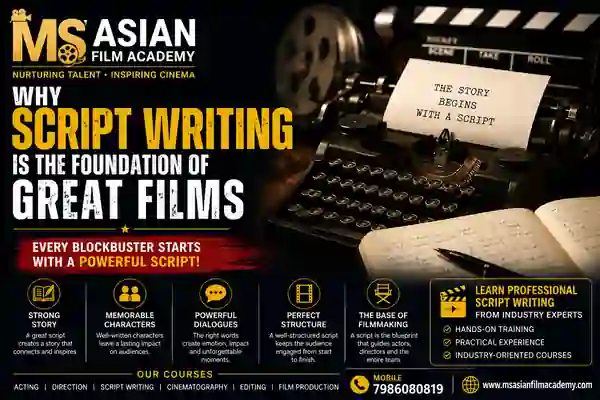
Why Script Writing is the Foundation of Great Films | MSAFA|
Why Script Writing is the Foundation of Great Films- Cinema is often remembered for its breathtaking visuals, emotional performances, powerful music, and unforgettable direction. But before a film becomes a cinematic masterpiece, it begins with one essential element — the script.
A strong script is the backbone of every successful film. It shapes the story, builds emotional depth, defines characters, controls pacing, and creates the foundation upon which directors, actors, cinematographers, and editors work. Without powerful script writing, even the most expensive productions can fail to connect with audiences.
From Bollywood blockbusters to Hollywood classics, every memorable film starts with a compelling screenplay. Whether it is an emotional drama, thriller, comedy, action film, or OTT series, script writing determines how effectively the story engages viewers.
At MS Asian Film Academy, aspiring filmmakers are taught that script writing is not just about dialogue — it is about storytelling, emotional connection, cinematic structure, and visual imagination. Modern filmmaking heavily depends on writers who understand both creativity and audience psychology.
What is Script Writing?
Script writing, also known as screenwriting, is the process of writing stories specifically for visual mediums such as films, television shows, web series, advertisements, and digital content.
A script includes:
- Story structure
- Character development
- Dialogues
- Scene descriptions
- Emotional flow
- Screen directions
- Visual storytelling elements
A screenplay acts as the blueprint of the entire film. Just like an architect designs a building before construction begins, a scriptwriter designs the emotional and narrative structure before filming starts.
Every department in filmmaking depends on the screenplay:
- Actors rely on scripts for performance.
- Directors rely on scripts for visualization.
- Cinematographers rely on scripts for framing and mood.
- Editors rely on scripts for storytelling continuity.
This is why script writing is considered the heart of filmmaking.
Why Script Writing Matters in Filmmaking
1. A Great Script Creates Emotional Connection
People do not remember films only for visuals; they remember how a film made them feel.
A strong screenplay creates:
- Emotional attachment
- Relatable characters
- Memorable moments
- Suspense and excitement
- Powerful emotional payoffs
Films like Taare Zameen Par, 3 Idiots, The Shawshank Redemption, and Interstellar became iconic because their scripts emotionally connected with audiences.
A weak script may result in:
- Flat storytelling
- Confusing narrative
- Poor emotional engagement
- Forgettable characters
This is why professional film schools such as MS Asian Film Academy emphasize emotional storytelling in screenplay training.
2. Script Writing Defines the Entire Story Structure
Every successful film follows a carefully designed structure.
A screenplay generally contains:
- Beginning (Setup)
- Middle (Conflict)
- Ending (Resolution)
This structure helps maintain audience interest throughout the film.
Professional scriptwriters carefully plan:
- Character arcs
- Plot twists
- Conflict escalation
- Scene progression
- Climax impact
Without proper structure, films can feel slow, disconnected, or confusing.
At MS Asian Film Academy, students learn how screenplay structure influences audience psychology and cinematic engagement.
3. Strong Scripts Create Memorable Characters
Iconic film characters are born through excellent writing.
Characters become memorable when:
- Their emotions feel real
- Their goals are clear
- Their struggles are relatable
- Their dialogues feel natural
Think about legendary characters like:
- Rancho from 3 Idiots
- Joker from The Dark Knight
- Rocky from KGF
- Kabir Singh
- Munna Bhai
These characters became popular because writers gave them depth, personality, and emotional authenticity.
Good script writing transforms fictional characters into cultural icons.
4. Script Writing Controls Film Pacing
One of the most overlooked aspects of filmmaking is pacing.
A screenplay controls:
- Scene timing
- Emotional rhythm
- Suspense buildup
- Comedy timing
- Action intensity
Poor pacing can make audiences lose interest even in visually stunning films.
A skilled writer knows:
- When to slow down emotions
- When to introduce conflict
- When to create tension
- When to deliver emotional relief
This balance is what keeps viewers engaged from beginning to end.
5. Great Scripts Reduce Production Problems
A detailed and professional screenplay improves production efficiency.
A strong script helps:
- Reduce shooting confusion
- Save production costs
- Improve scheduling
- Prevent unnecessary reshoots
- Maintain creative clarity
Directors and producers prefer well-written scripts because they make the filmmaking process smoother.
Many film academies, including MS Asian Film Academy, teach screenplay formatting and practical production writing to prepare students for real-world filmmaking.
6. Script Writing is the Core of OTT Content
The rise of OTT platforms has changed the entertainment industry completely.
Today audiences expect:
- Strong storytelling
- Layered characters
- Realistic dialogues
- Engaging narratives
OTT platforms like Netflix, Amazon Prime, Disney+ Hotstar, and JioCinema prioritize content-driven storytelling over star power alone.
Modern web series succeed because of:
- Tight screenwriting
- Character consistency
- Multi-layered plots
- Emotional realism
This has increased the demand for skilled screenplay writers across India and globally.
7. Script Writing Gives Direction to Actors
Actors cannot deliver powerful performances without strong writing.
A good screenplay provides:
- Character motivation
- Emotional context
- Dialogue depth
- Relationship dynamics
Actors perform better when:
- Characters feel authentic
- Dialogues feel natural
- Emotional scenes are properly written
Even the best actors struggle when scripts lack emotional depth.
This is why acting and script writing are deeply connected fields.
At MS Asian Film Academy, acting students are also trained to understand screenplay interpretation and character psychology.
8. Dialogue Writing Makes Films Memorable
Many legendary film moments are remembered because of iconic dialogues.
Examples include:
- “All is well”
- “Kitne aadmi the?”
- “Pushpa, naam sunke flower samjhe kya?”
Powerful dialogues:
- Create emotional impact
- Enhance character identity
- Improve audience engagement
- Increase film recall value
However, effective dialogue writing is not about making lines dramatic. It is about making conversations feel believable and emotionally meaningful.
Professional screenplay training focuses heavily on realistic dialogue writing.
9. Script Writing Builds Cinematic Vision
A screenplay is not merely literature; it is visual storytelling.
Screenwriters must think visually:
- Camera movement
- Scene mood
- Character placement
- Silence and pauses
- Visual symbolism
The best screenplays allow directors to imagine scenes clearly before shooting begins.
This cinematic visualization is a key part of advanced screenplay education at MS Asian Film Academy.
10. Every Film Genre Depends on Strong Writing
Different genres require different screenplay techniques.
Action Films
Need tension, pacing, and impactful scenes.
Comedy Films
Require timing, setup-payoff structure, and character humor.
Horror Films
Depend on suspense, silence, and psychological buildup.
Romance Films
Need emotional chemistry and relatable conflicts.
Thriller Films
Require mystery, twists, and layered storytelling.
A screenplay writer must understand how genre psychology works.
This is why screenplay writing is considered one of the most technically demanding creative professions.
Why Modern Cinema Needs Skilled Scriptwriters
The entertainment industry is rapidly evolving.
Today filmmakers require writers for:
- Films
- OTT web series
- YouTube content
- Short films
- Advertisements
- Brand storytelling
- Digital cinema
- Documentary filmmaking
As audiences become smarter, content quality matters more than ever.
Modern viewers reject weak stories quickly.
This has increased the demand for:
- Professional scriptwriters
- Screenplay consultants
- Dialogue writers
- Story developers
Institutes like MS Asian Film Academy help students understand modern cinematic storytelling trends and industry expectations.
How Film Academies Help Aspiring Scriptwriters
Many aspiring writers struggle because they lack:
- Story structure knowledge
- Industry guidance
- Character development skills
- Practical screenplay experience
Professional film academies provide:
- Structured screenplay education
- Industry exposure
- Script analysis sessions
- Practical assignments
- Short film projects
- Live workshops
At MS Asian Film Academy, students receive hands-on filmmaking exposure that helps them understand how scripts transform into visual cinema.
The academy focuses on:
- Practical learning
- Creative storytelling
- Emotional writing
- Visual screenplay techniques
- Industry-oriented training
The Future of Script Writing in India
India’s entertainment industry is growing rapidly due to:
- OTT expansion
- Independent cinema
- Regional content growth
- Digital storytelling
- Global streaming audiences
This growth has created massive opportunities for screenplay writers.
Writers today can work in:
- Bollywood
- Regional cinema
- OTT platforms
- Advertising agencies
- YouTube production houses
- Film studios
- Independent filmmaking
As storytelling becomes more content-driven, script writing will continue to remain the foundation of successful cinema.
Conclusion
Great films are not created by cameras alone. They begin with ideas, emotions, characters, and stories — all shaped through script writing.
A screenplay is the foundation upon which the entire cinematic experience is built. It guides actors, directors, editors, cinematographers, and producers toward a unified vision.
No matter how advanced filmmaking technology becomes, storytelling will always remain at the center of cinema.
For aspiring filmmakers, learning screenplay writing is one of the most important steps toward building a successful career in the entertainment industry.
Institutes like MS Asian Film Academy are helping the next generation of writers, actors, and filmmakers develop the creative and technical skills needed to succeed in modern cinema.
Whether your dream is to write films, create web series, direct movies, or become part of the entertainment industry, mastering script writing is the first and most essential step.
FAQs
1. Why is script writing important in films?
Script writing is important because it forms the foundation of the entire film. It defines the story, characters, emotions, dialogues, pacing, and cinematic structure.
2. Can a film succeed with weak script writing?
Sometimes star power or visuals may attract audiences initially, but films with weak scripts often fail to create long-term impact or emotional connection.
3. What skills are required for screenplay writing?
Important screenplay writing skills include:
- Storytelling
- Creativity
- Character development
- Dialogue writing
- Emotional understanding
- Visual imagination
- Structure planning
4. Is script writing a good career in India?
Yes. The rise of OTT platforms, digital cinema, YouTube content, and independent filmmaking has created huge demand for professional screenplay writers in India.
5. Where can I learn professional script writing?
You can learn screenplay writing from professional institutes like MS Asian Film Academy, which offers industry-oriented filmmaking and script writing courses.
6. What is the difference between story writing and script writing?
Story writing focuses on narration and imagination, while script writing is designed specifically for visual storytelling in films and screen media.
7. Do screenplay writers also write dialogues?
Yes. Many screenplay writers write dialogues along with scene structures, although some productions hire separate dialogue writers.
8. Is screenplay writing difficult?
Screenplay writing requires creativity, discipline, observation, and storytelling skills. With proper training and practice, anyone passionate about cinema can learn it.
9. How long does it take to learn script writing?
Basic screenplay concepts can be learned within months, but mastering storytelling and cinematic writing requires continuous practice and real-world experience.
10. Why do film academies teach screenplay writing?
Because script writing is the core of filmmaking. Understanding screenplay structure helps actors, directors, editors, and filmmakers improve their cinematic understanding.
Supported by Nav Times News, Powered by MSasian Entertainment , Supported by MSAFA